Welcome
I help thoughtful, ambitious adults experiencing burnout, relationship stress, and chronic physical symptoms.
You might be high-performing on the outside while managing persistent exhaustion, physical symptoms, career overwhelm, or relationship patterns that leave you feeling anxious and hypervigilant.
You’ve likely tried meditating, analyzing your thoughts, making lifestyle changes, and pushing through—yet the internal chatter, pressure, or quiet dread remains.
Real relief doesn't come from forcing yourself to try harder. In therapy, we work directly with the deeper stress responses and unconscious patterns that keep you feeling stuck.
The aim is change you can actually feel in your body and daily life—not just more insight.
My philosophy is simple: rhythm over force, depth over noise, and authenticity over performance.
About
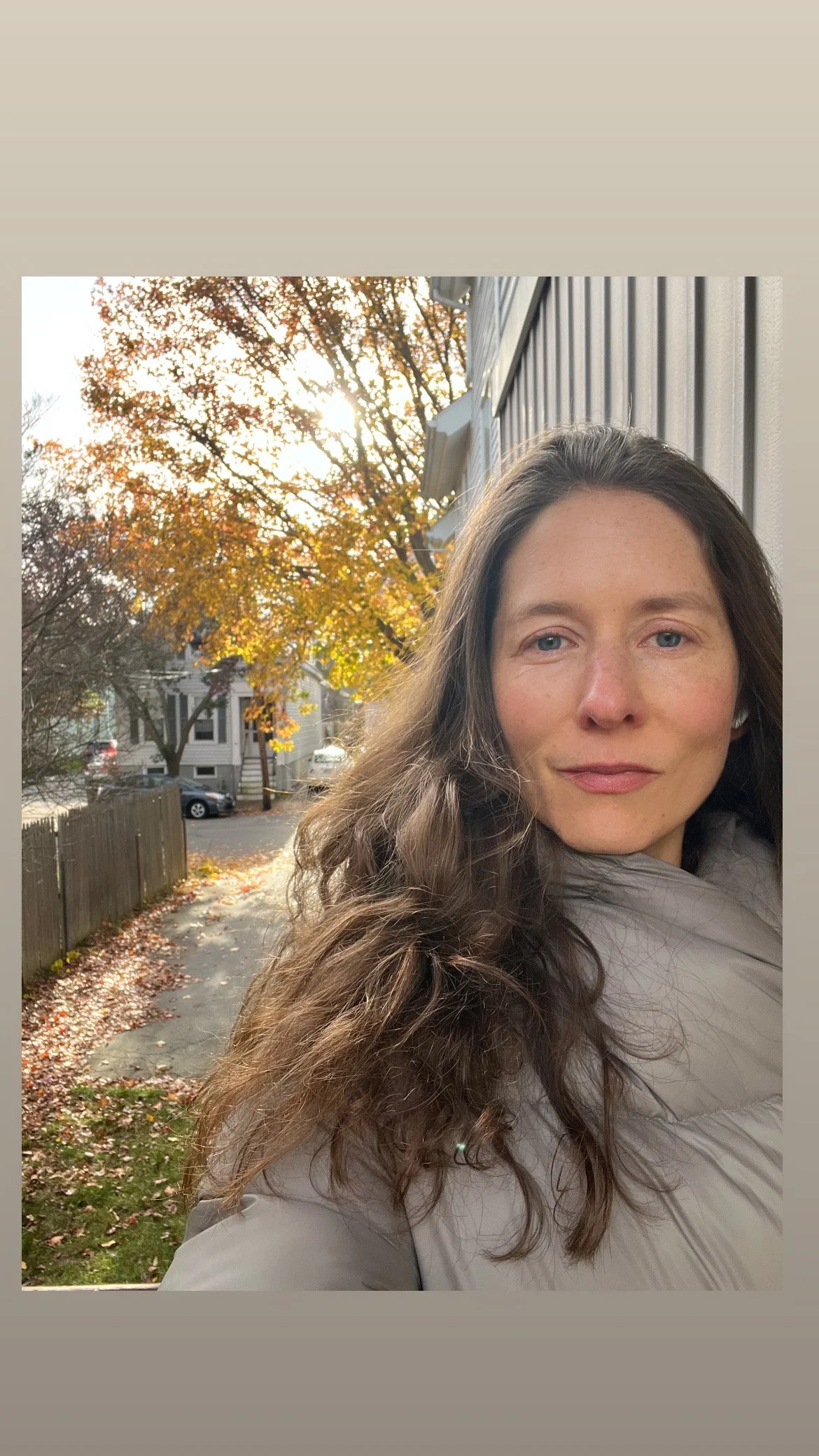
Before becoming a therapist, Julia experienced severe burnout with chronic physical symptoms herself. After working with countless specialists, researching and trying every protocol she could find—she discovered that lasting recovery required understanding the internal conflicts driving the burnout cycle, not just managing symptoms, and in the presence of a safe specialist. That process took her years of trial and error, self-advocacy, and deep research.
Today, she applies those learnings and advocacy to her work in order to help others heal.
Her lived understanding, integrated with trauma-informed, relational psychotherapy, allows her to meet clients with both compassion and discernment.
If something here resonates with you, click the link below to schedule a complimentary consultation call — a chance to connect and see if it feels like a good fit.
Clients come to Julia not because they can't think, but because thinking alone can't reach where the stress lives — held in the body, encoded in the autonomic nervous system.
Some clients reach out in the midst of a rupture: burnout, relationship challenges, a health shift, or an emotional unraveling that no longer responds to willpower or coping strategies. Others reach out when life looks “fine” on the outside, but internally something feels off — less resilience, more effort, more reactivity, more exhaustion.
Julia helps clients understand the internal systems that drive them — the parts that push, protect, perform, or manage — and what those parts are actually trying to accomplish. Together, you build the kind of internal and relational safety that makes change sustainable.
Therapy becomes a space to slow down just enough to hear what your system has been signaling, and to create conditions where emotion can be met without overwhelm or shutdown. Therapy requires warmth, attunement, and respect for what the body and emotions are carrying. It also requires structure, patience, timing, and containment. Julia’s role is to hold both.
What actually is the nervous system — and why does it matter?
I hear you — “nervous system” seems to be the clinical buzzword these days. Let’s define what it actually means.
The nervous system is your body’s listening and responding system. It is the part of you that answers one basic question all day long:
“Am I safe right now?”
-
“Am I safe right now?”
That’s it. It’s not complicated. It’s not abstract.
It’s the system that:
· Notices what’s happening inside and around us
· Decides if we’re safe, threatened, connected, or overwhelmed
· Shifts our body and emotions to respond
It listens to:
· Tone of voice
· Facial expressions
· Touch
· Pace
· Presence
· Our own inner sensations and feelings
And then it responds by:
· Opening or closing
· Relaxing or bracing
· Reaching toward or pulling away
-
From a biological perspective, the nervous system includes the brain, spinal cord, and nerves.
It constantly transmits signals that coordinate movement, sensation, thought, emotion, and automatic functions like breathing, digestion, and heart rate.
It’s the system that allows the body and brain to respond to what’s happening — inside and around us.
Major Divisions
Central Nervous System (CNS): Brain and spinal cord; the integration center.
Peripheral Nervous System: Nerves connecting the CNS to the rest of the body.
Somatic Nervous System: Controls voluntary movements (skeletal muscles).
Autonomic Nervous System: Manages involuntary functions (heart rate, digestion).
Sympathetic: "Fight or flight".
Parasympathetic: "Rest and digest".
-
Right now, “nervous system work” often gets translated as:
Techniques
Regulation strategies
Fixing symptoms
“Get calm”
But that’s only one small expression of what the nervous system actually is.
Spoiler alert- there is no such thing as a nervous system “reset.”
Your nervous system is not a machine that responds to a reboot like a computer.
It is a dynamic, living component that controls your living and breathing functions- not the other way around.
The nervous system didn’t evolve to be calm.
It evolved to be relational and responsive. -
It matters because much of what we experience as anxiety, shutdown, reactivity, or exhaustion isn’t a personal failure — it’s a nervous system doing its job.
Clients come to me not because they can't think, but because thinking can't reach where the trauma lives — held in the body, encoded in the autonomic nervous system, and carried by parts attempting to protect us.
Trauma isn't only stored in the thinking brain. It lives deeper — in the nervous system's learned patterns of protection, and in the parts of us that formed around those experiences to keep us safe.
That's where we go to heal.
Lasting change happens when the nervous system no longer has to stay on alert — when it feels met, accompanied, and safe enough to reorganize.
And when the parts carrying the pain finally feel seen and listened to, rather than managed.
This is the difference between managing symptoms and healing at the root.
-
“How do I get my body to calm down?”
This often focuses on:
Techniques
Breathing
Regulation exercises
Managing activation
Useful — but limited.
When people talk about the nervous system, they usually mean calming techniques or regulation strategies.
That’s not wrong — but it’s incomplete.
Most techniques require effort, focus, and self-management.
For many people, that actually keeps the nervous system working harder
-
The nervous system doesn’t change because we force it to.
It changes because it feels safe enough to reorganize.I don’t try to control your nervous system. I relate to it.
I help your nervous system feel met, seen, and accompanied.
My work with you isn’t about fixing.
It’s about creating conditions where the body no longer has to protect so hard.
That happens through consistent:
Presence
Attunement
Compassion
Relational safety
Which is why it’s relational, not technical.
This is nervous system healing at the root.
-
Your nervous system isn’t broken.
It’s intelligent.
It’s been protecting you.
My work with you is helping it feel safe enough to respond differently — at its own pace.

Curiosity

-
No. Many clients reach out when life looks functional on the outside, but internally something feels off—less resilience, more effort, more reactivity, more exhaustion. Others come in the midst of a rupture: burnout, relationship challenges, or physical symptoms that no longer respond to willpower. I work with both.
-
Contact me via the calendar link or form to schedule a free phone consultation. This call is an opportunity for me to understand the type of support you need and for you to get a better sense if you would like to work with me.
-
My fees depend on the length of the session and services provided. Contact me for all other questions about fees and services.
-
I’m an out-of-network (OON) provider. I can provide you with a monthly superbill for you to submit to your insurance company, but I do not bill insurance directly.
-
Call the number on the back of your insurance card and ask the following 4 questions:
Does my plan include “out-of-network” coverage for mental health?
What is my annual deductible for mental health benefits?
What is my co-insurance? (What percentage does the plan cover?)
Is there a limit on the number of sessions my plan will cover per year?
-
Sessions are weekly.
-
The length of therapy can vary depending on each person's unique needs and goals. Some clients may feel significant shifts in just a few sessions, while others may choose to engage in therapy over a longer period. Ultimately, the process is tailored to you, ensuring that we move at a pace that feels sustainable for your growth.
-
The Internal Family Systems (IFS) model of psychotherapy offers a clear, non-pathologizing, and empowering method of understanding human problems, as well as an innovative and enriching philosophy of practice. IFS has become my preferred therapeutic model because it reaches depth, and change, quickly, but gently, and the positive effects endure over time.
-
Life can feel complicated. Patterns repeat, you get stuck, or you hold yourself back. Sometimes you just want more ease and clarity.
Therapy gives you space to look at yourself with curiosity, uncover blind spots, and make sense of your experiences and relationships.
And if you’re not sure what to expect — that’s completely normal.
Licensed Psychotherapist, LMHC, LCPC
New York University - M.A. of Psychology
George Washington University - B.A. of Business Administration
Internal Family Systems (IFS) Training led by Dr. Richard Schwartz, founder of IFS, and Martha Sweezy, Ph.D.
The Sacred Nervous System: A Relational Pathway for Self and IFS
Internal Critics & Challenging Protectors Through the Lens of IFS with Chris Burris
IFS-Informed led by Dr. Richard Schwartz
Clinical Training
Emotion-Focused Therapy - GETME Gestalt/Experiential Therapy of Maine
IFIO - Cambridge Health Alliance
IFS Therapy for Groups- Cambridge Health Alliance
Holistic Health & Nutrition Certified - Institute of Integrative Nutrition
CBT - Beck Institute of Cognitive Behavioral Therapy led by Judith Beck
Therapy
Online or over the phone, we meet for 50 minutes.
Meetings are weekly.
Scheduling is flexible.
Documentation for out-of-network insurance benefits can be provided.
Let’s Connect.
Schedule a consultation call using the calendar or the form below.
If you prefer to message Julia, you can do so by using the form below:
Resources

Give yourself permission to receive support